Fine Print
A retrieval tool that answers plain questions about real app privacy policies, quoting the exact clause and refusing honestly when the policy does not cover it.
- Role
- Design + build
- Scope
- Concept to live deploy
- Corpus
- 31 apps and companies
- Cost to run
- Free
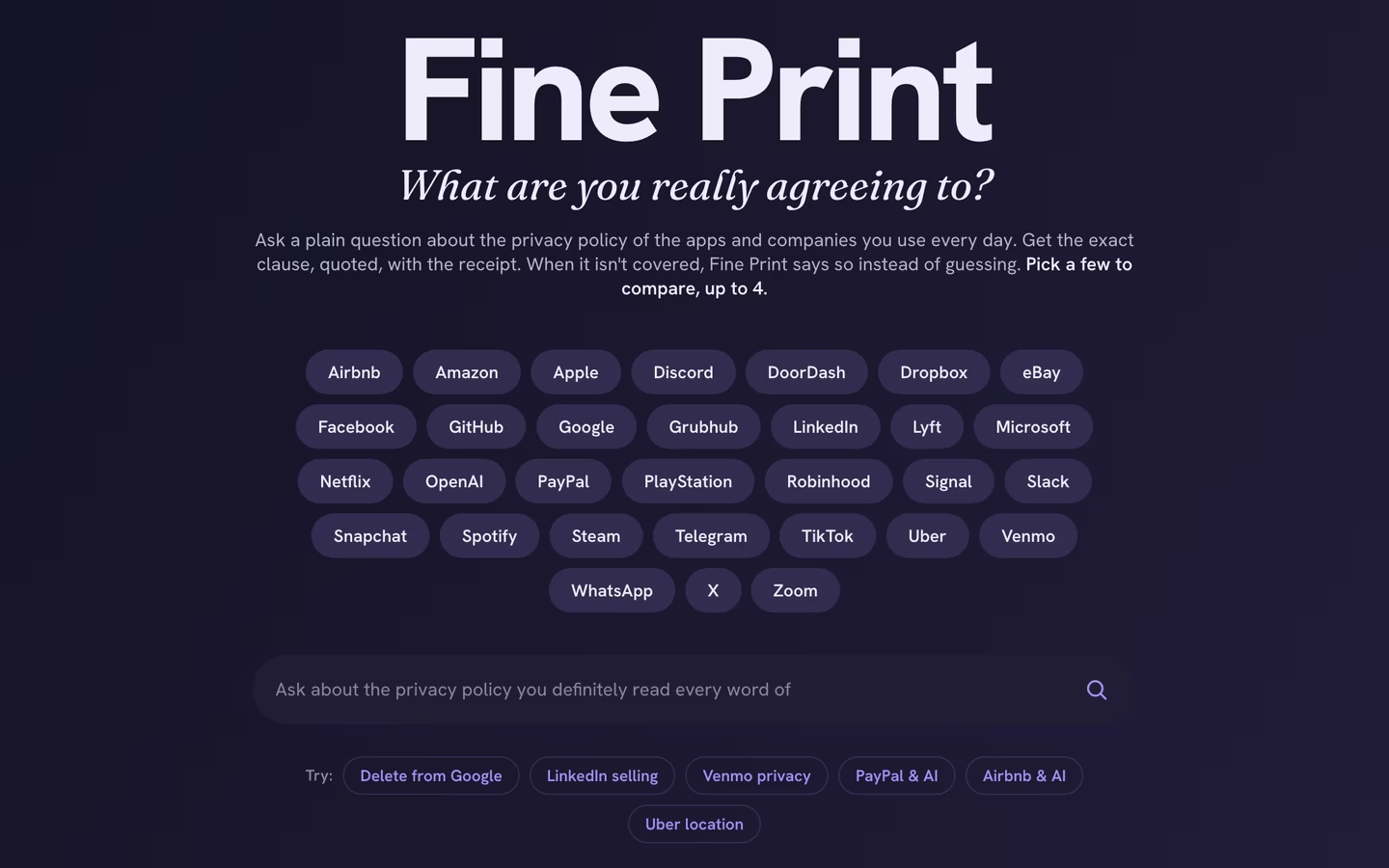
Fine Print reads the privacy policies people agree to without reading. You ask a plain question, optionally comparing up to four apps, and it finds the relevant clause in the real policy, quotes it, and gives you a one sentence answer. When the policy does not cover the question, it says so instead of guessing. I designed it and built the whole thing myself, both the retrieval and the deploy that keeps it live for free.
the key decisionThe obvious version was a summarizer, but you can already paste a policy into ChatGPT and get that. I wanted the opposite. Ask one question, get the exact clause that answers it, and when the policy does not cover it the app says so instead of guessing. The honest refusal is the whole point of it.
The problem
Privacy policies are dozens of pages of legal language that is arguably built to be skipped. You click I agree and move on with no real idea what you agreed to. Fine Print aims that document at one plain question and shows the exact line that answers it.
Verdict first, then the receipt
The answer leads with a plain one sentence verdict, with the exact quoted clause directly underneath, so you get the answer and can check it in the same glance. A transparency panel shows every passage the retrieval pulled, how closely each one matched, and which ones were actually quoted.
Honest refusal as a designed state
When a policy does not cover the question, the refusal reads the same as any other answer, calm and plain, because here a refusal is a real answer. The suggested questions are filtered per app, so a policy that never mentions advertising will not offer you that question and walk you into a dead end.
Fine Print is live and runs for free. Ask a real question and you get a plain verdict, the exact quoted clause, a link to the source policy, and a panel showing every passage it considered and which ones it used. It refuses honestly when it cannot answer, which is the part that makes it worth trusting.